
Creatine After 50: The Most Misunderstood Supplement on the Shelf
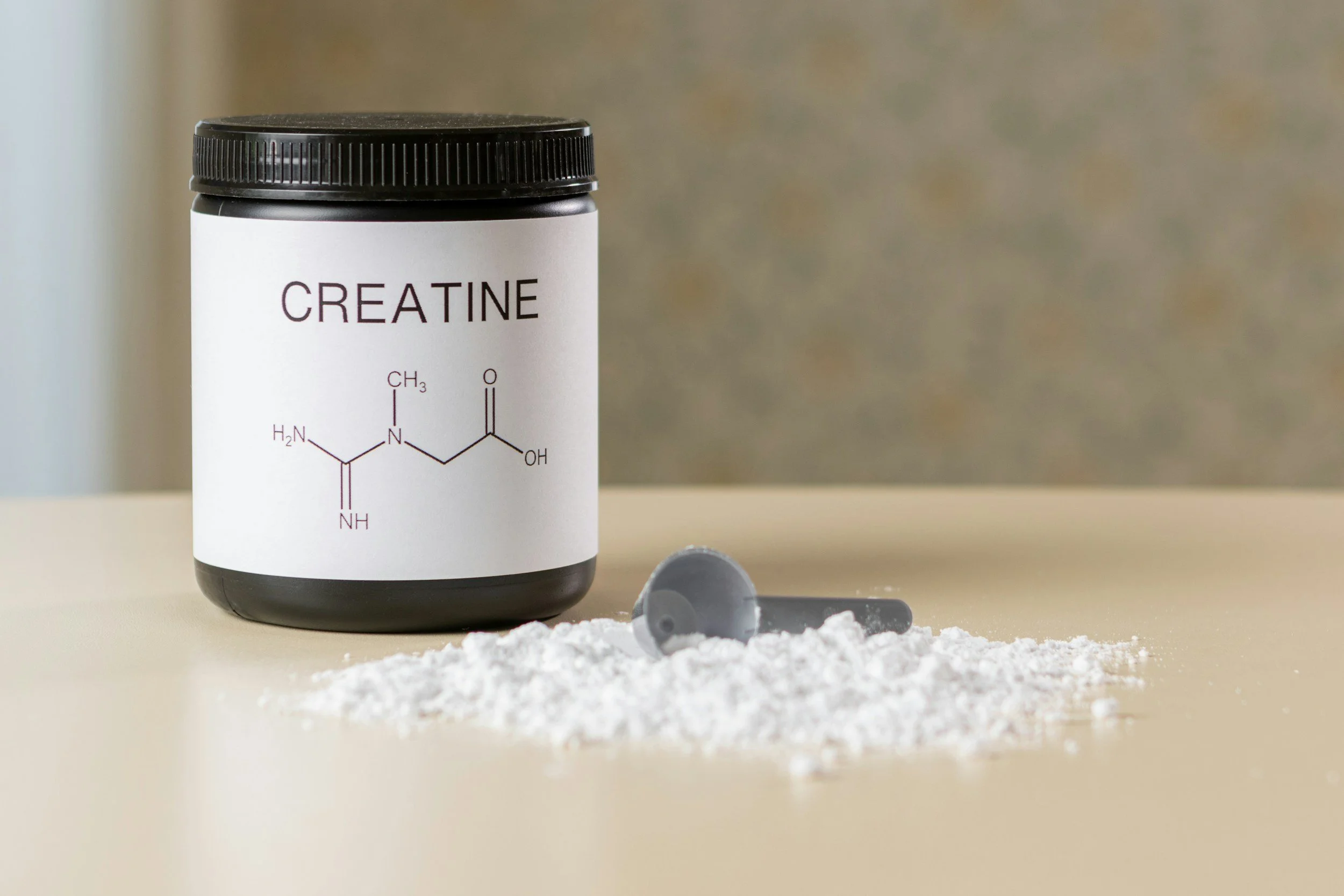
Mention creatine to most people over fifty and you'll get one of two reactions. Either a blank look, or a firm shake of the head — oh no, that's for bodybuilders. I've heard it hundreds of times in the studio.
So let's clear it up, because creatine is one of the most heavily researched supplements in existence, and the group with arguably the most to gain from it isn't twenty-something gym-goers at all. It's us.
What it actually is
Creatine isn't a drug or a hormone. It's a compound your body already makes, and one you already eat — it's found naturally in red meat and fish. Your muscles store it and use it to produce quick bursts of energy: standing up, climbing stairs, carrying shopping, lifting something heavy off a shelf.
The catch is that most of us store less of it than we could, and our natural levels tend to drift downward as we age. Supplementing simply tops the tank up.
"Creatine won't make you bulky. What it may do is make the last two reps possible — and it's those last two reps that keep you independent."
Why it matters more with age
From around forty, we start losing muscle mass steadily unless we work to keep it — and with it goes strength, balance and, eventually, independence. Resistance training is the main defence. But the research consistently shows that creatine alongside resistance training produces better gains in strength and lean muscle than training alone.
There's also a growing body of work looking at creatine and the brain — your brain uses the same energy system your muscles do — with early findings around mental fatigue and memory. That research is still developing, so I won't overstate it. But it's interesting, and it's worth watching.
Clearing up the myths
"It'll damage my kidneys." This is the big one, and decades of studies in healthy adults haven't supported it. If you have existing kidney disease, that's a genuine conversation to have with your doctor — but that's true of any supplement.
"It'll make me bulk up." No. Building visible muscle takes years of dedicated training. Creatine helps you train a little harder; it doesn't change your shape overnight.
"It's just water weight." Creatine does draw a little water into the muscle — that's part of how it works, and it's inside the muscle, not bloating under your skin.
"It's a steroid." It genuinely isn't. Different substance, different mechanism, different rules entirely.
How to take it, simply
Creatine monohydrate is the form with the most evidence behind it, and it's also the cheapest — you don't need the fancy versions. Three to five grams a day, mixed into water, juice or a smoothie. Timing doesn't matter much; consistency does. You don't need to "load" and you don't need to cycle off. Drink your normal amount of water and give it a month before you judge it.