
What Your Bones Are Doing While You Sit Still
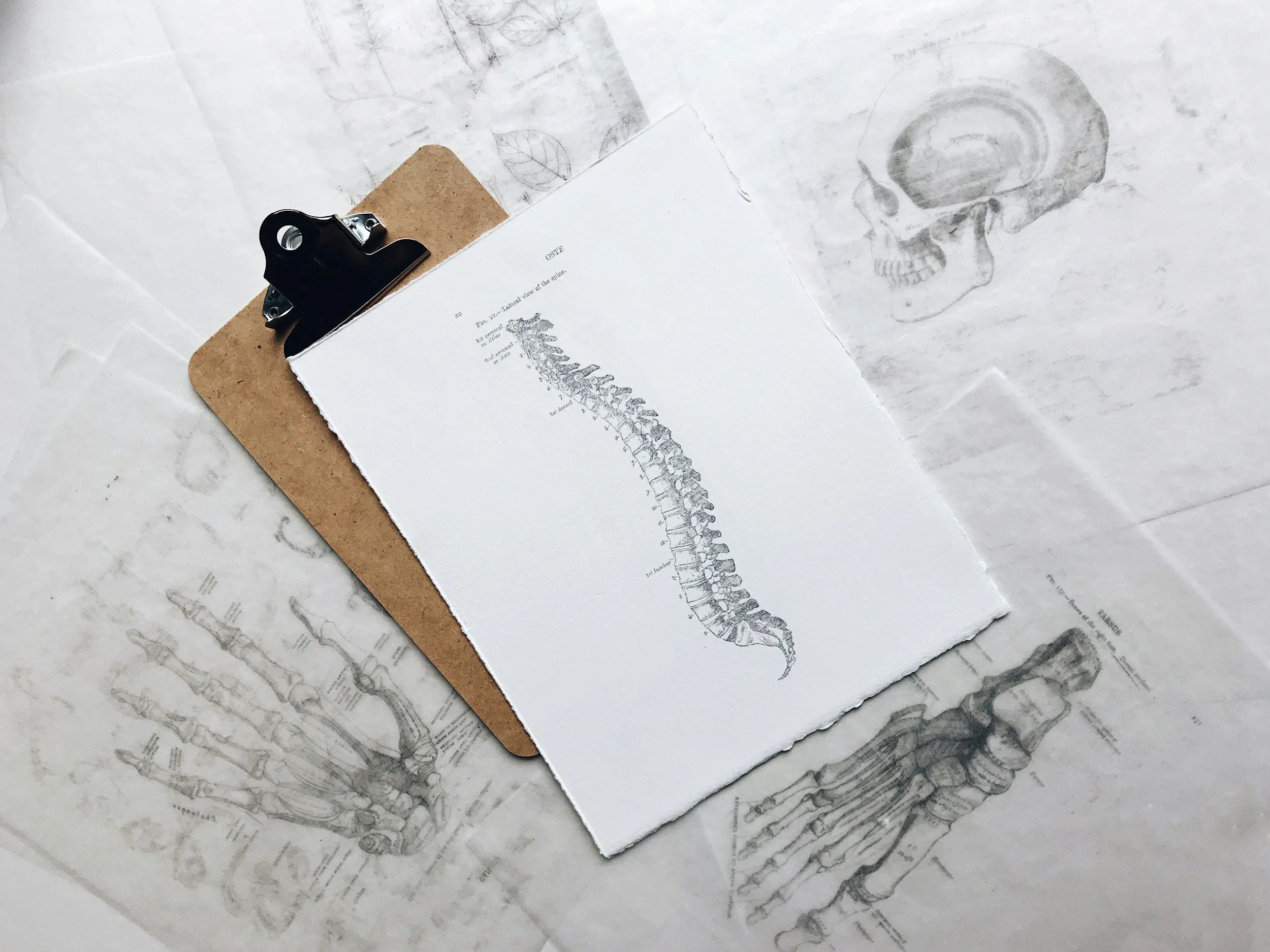
Most people picture their skeleton as scaffolding — inert, finished, holding everything else up. It isn't. Bone is living tissue, constantly being broken down and rebuilt, and the balance between those two processes is decided largely by how you use it.
Which means that while you're sitting still, your bones are making a decision. And the decision they make when nothing is being asked of them is to give a little back.
Osteopenia, osteoporosis, and the words in between
If you've had a bone density scan you may have been given one of these terms. Osteopenia means density lower than a young adult's but not yet in the danger zone — a warning light, not a diagnosis of disease. Osteoporosis means density has dropped far enough that fracture risk is meaningfully raised.
Neither is a sentence, and neither means you should stop moving. Quite the opposite — though the type of movement matters more than most people are told.
"Bone responds to being challenged. Walking is a conversation it has already had ten thousand times."
Why walking isn't enough
I say this as someone who will defend walking to anyone. It's marvellous for your heart, your joints, your blood sugar and your head. But for bone, it falls short — and the reason is interesting.
Bone adapts to loads it isn't used to. Your skeleton has handled the load of walking countless times; it holds no novelty and prompts no adaptation. To build bone you need loads that are heavier, faster or applied in unfamiliar directions.
That's why swimming and cycling, for all their virtues, do very little for bone density. There's no impact and no meaningful load.
What does work
Progressive resistance training. Muscles pull on bones, and that pull is one of the strongest signals bone receives. Heavier work, built up sensibly over time, is the best-supported intervention we have.
Impact, appropriately dosed. For those who can tolerate it, small amounts of impact — stepping down, heel drops, brief hops — stimulate bone effectively. This must be matched to the individual, which is exactly why it's worth being assessed rather than guessing.
Calcium, vitamin D and protein. The raw materials. Training without them is asking for bricks without a delivery.
The point most people miss
Bone density is only half the equation. A fracture requires a fall. So the most effective plan doesn't just strengthen bone — it also makes you far less likely to hit the ground: better balance, stronger legs, faster reactions.
If you've had a scan and aren't sure what to do with the result, bring it in. Between Kellie's clinical assessment and a properly progressed strength program, there's a great deal that can be done — and the sooner it starts, the better it works.